Rabai is the cradle of Christianity in East Africa. It was here in 1846 that Dr. Johann Ludwig Krapf put up the first church building in the region, and here that the first Christian village in East Africa grew up around it.
Rabai is about 25 km north-west of Mombasa, off the Nairobi–Mombasa highway on the Mazeras–Kaloleni road, roughly half an hour's drive from the city.
Johann Ludwig Krapf was born in 1810 at Derendingen in Württemberg, Germany, and trained for mission work at the Basel Mission seminary. The Church Missionary Society (CMS), which often recruited German missionaries at the time, first sent him to Ethiopia (Abyssinia). He arrived in Mombasa in 1844 and stayed at Leven House in the Old Town.
His first months on the coast brought deep sorrow. Both he and his wife Rosine fell ill with malaria. Rosine died soon after giving birth to their daughter, and the baby died a few days later. They were buried at Mkomani on the Mombasa mainland, near today's Krapf Memorial Park.
Krapf had hoped to reach the Galla (Oromo) people further north, but when that proved impossible he turned his attention to the Mijikenda, whom he called the “Wanika”. His vision was an “Apostle Street”: a chain of mission stations stretching right across Africa.
In 1846 Krapf was joined by Johannes Rebmann, and together they went up to Rabai to build a mission station. Because it stood just outside the old Rabai kayas, it became known as Rabai Mpya, “New Rabai”. Rabai Mpya became the headquarters of the CMS on the coast and the base from which missions set out to the north and into the interior of East Africa.
The two missionaries also gave themselves to language work. Krapf wrote the first outline of a Swahili grammar, compiled a Kiswahili dictionary and translated portions of the New Testament into Kiswahili, Kinyika (Kirabai) and Kikamba. His reports of his journeys inland drew many European explorers and missionaries after him.
The first convert at Rabai was Mringe (Mrenje), a gravely ill and disabled man, in 1851. In 1860 Abe Gunja and his son Nyondo were baptized as Abraham and Isaac. Isaac Nyondo went on to serve as Rebmann's assistant and became the first African teacher in Kenya. He married Polly, a Christian freed slave from India, and served as a church elder at Rabai until his death in 1881. Polly then became matron of the girls' dormitory at Frere Town.
Two landmarks from those early years remain at Mbarakani village, between Kaya Mudzi Muvya and the mission: a ten-foot well known as chirondani, and a chigogo game board carved into the rock.
Rabai grew into the first Christian village in East Africa. It had a church, Krapf's house (which also served as a school and dispensary), Rebmann's cottage, a printing press house, a market and a cemetery.
Between 1875 and 1890 the village took in freed slaves and “Bombay Africans” (freed slaves who had been trained in India), as well as many runaway slaves (watoro) from nearby Arab and Giriama plantations. By 1888 about 2,000 people lived at Rabai, to the great displeasure of slave owners in Mombasa. The pastor in charge was William Jones, a freed slave trained at Nasik in India, while Rev. William Salter Price was Superintendent of Frere Town.
On Christmas Day 1888, General Lloyd Mathews of the Imperial British East Africa Company came to Rabai to count the runaway slaves so that their owners could be compensated. That day 1,421 people were encouraged to apply for freedom certificates, 933 of them from Rabai.
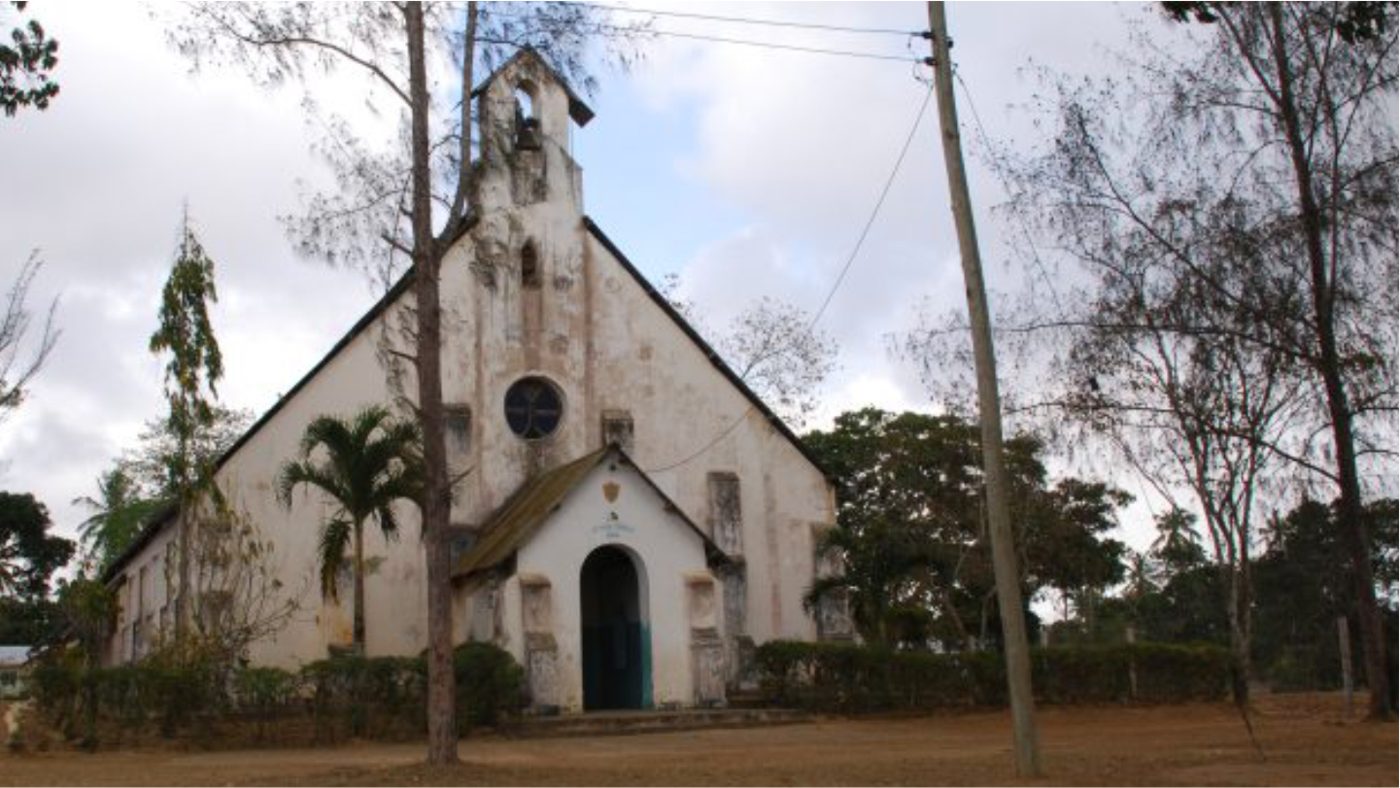
As the Christian community grew, a larger church was needed. St. Paul's Church was built and opened in 1887 by Bishop Henry Parker, who succeeded Bishop James Hannington after Hannington was killed on his way to Uganda in 1885. It was at Rabai that Bishop Hannington had used his simple chair-throne before setting off on that fateful journey.
For a time Rabai served as the headquarters of the Anglican Church in East and Central Africa, and its influence reached as far as Uganda. The layout of the Rabai Christian Village, with its church, mission houses and cottages, was copied in other Christian villages and brought Western building styles to stand alongside traditional ones.
The church was first given about 99.9 hectares of land. Much of it was later divided up for schools and for individuals, and the church holds about 10.5 acres today.
The first church building, put up by Krapf in 1846, is now the Krapf Memorial Museum, opened in 1994 as a lasting reminder of the first missionaries. Its displays tell the story of Krapf and those who followed him, and hold artifacts of early Christianity and of Rabai culture. Stories of those first missionaries are still passed on by word of mouth in Rabai today.