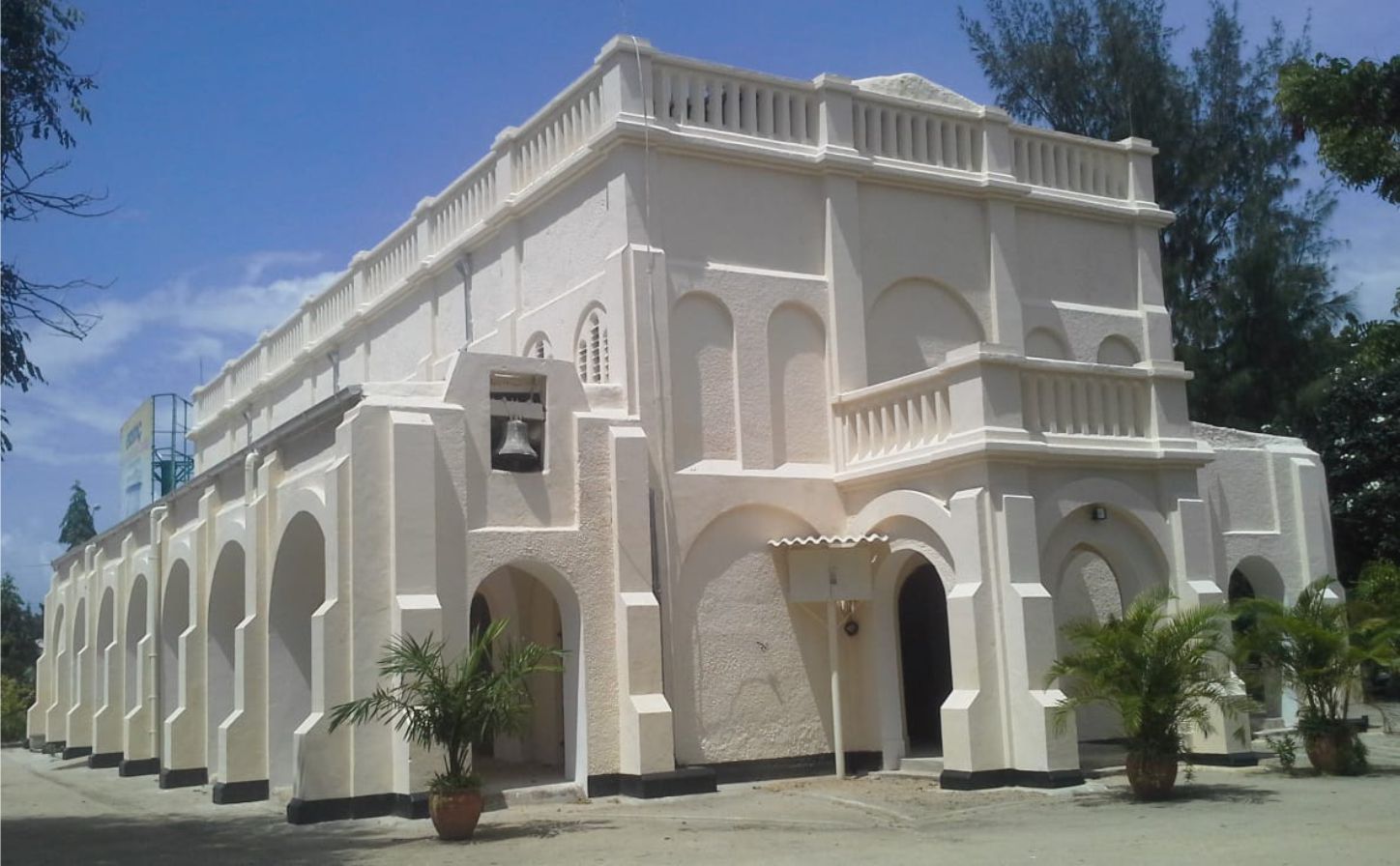
Emmanuel Church, Kengeleni, was established by the Church Missionary Society in 1889 as a place of worship for freed slaves in the Frere Town Christian Village, Mombasa.
Frere Town was founded in 1875 and named after Sir Henry Bartle Frere (1815–1884), a former Governor of Bombay, who negotiated the 1873 treaty with Zanzibar to end the slave trade in East Africa.
To build the new settlement, the CMS called on Rev. William Salter Price, superintendent of the Sharanpur Christian Village at Nasik near Bombay, on the west coast of India. Since 1855 Sharanpur had been a home for Africans rescued from slave dhows.
Rev. Price brought with him residents of Sharanpur and freed slaves eager to return to Africa. Among them were the “Bombay Africans”, trained in farming, carpentry, masonry and mechanics, who spoke English and several Indian languages. They were to form the Christian core of the settlement and help Rev. Price get Frere Town off to a good start.
Many Freretownians today are descendants of freed slaves who came from Nyasaland (present-day Malawi) and Southern Rhodesia. The name Kengeleni comes from the huge bell (kengele) erected nearby along the Mombasa–Malindi highway, a reminder of the bells once rung to warn coastal dwellers whenever slave dhows appeared on the Indian Ocean.
Emmanuel Church was built in 1889 to give the people of Frere Town their own place of worship. That same year the Hannington Chair-Throne, made in Frere Town in 1884, was placed in the church, where it was used by Bishops Tucker and Peel. It now stands in the Mombasa Memorial Cathedral.
Emmanuel Church and the Frere Town community were once allocated 600 acres of land between Kengeleni, Mishomoroni, Mkomani, Nyali and Junda. After disagreements between the missionaries and the freed slaves, the land was sold to the Nyali company and the descendants of the freed slaves were resettled on 50 acres in the Kisimani area, now known as Frere Town. The British Government committed 40 pounds sterling a month for the maintenance of the church, though the grant has diminished over time.
Today Emmanuel Church, Kengeleni, is a national monument under the National Museums of Kenya.